- Tom
- blockchain, healthcare, Technology
- 0 Comments
- 18738 Views
What is blockchain used for? Blockchain in Healthcare
1/ Key takeaways
Blockchain technology is transforming the medical sector by securing electronic health records and streamlining clinical trials. As a result, decentralized platforms empower patients to control their data while reducing administrative costs across the board.

2/ What is blockchain used for? Blockchain in healthcare
2.1. What are the benefits of blockchain in healthcare?
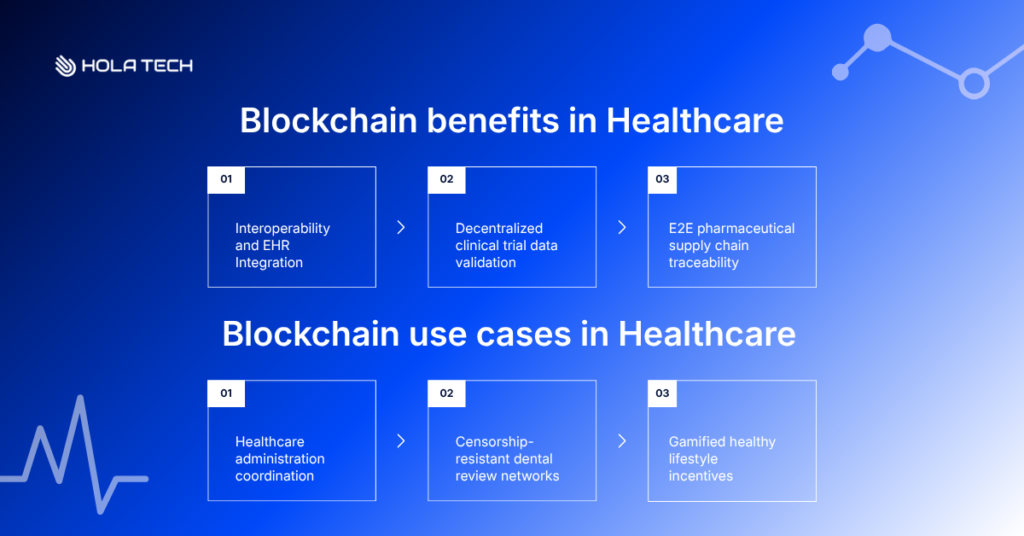
– Interoperability and Electronic Health Records (EHR) Integration: Traditional medical data systems remain heavily siloed, forcing patients to repeat expensive diagnostic tests when switching providers. Enterprise Ethereum builds a decentralized ledger that securely connects these isolated networks together. Consequently, physicians gain instant visibility over complete medical histories to prevent medical errors.
– Decentralized clinical trial data validation: Clinical research administrators frequently struggle to verify massive volumes of participant data across disconnected healthcare repositories. Blockchain technology introduces immutable records that safeguard patient privacy while establishing absolute data integrity. Furthermore, automated smart contracts streamline the entire validation lifecycle so researchers can accelerate new medical treatments safely.
– End-to-end pharmaceutical supply chain traceability: Global pharmaceutical markets face severe threats from counterfeit drugs that alter active ingredients and jeopardize patient safety. Distributed ledgers securely track every stage of the medical supply chain to prevent the distribution of illicit substances. Moreover, immutable tracking mechanisms verify exact drug compositions, which protects consumers from dangerous side effects.
2.2. Top blockchain use cases in healthcare
– Decentralized healthcare administration coordination: Solve.Care utilizes blockchain technology to manage care, benefits, and payments between all stakeholders like patients, doctors, and insurers. Furthermore, the platform adopts a dual token mechanism featuring SOLVE and Care.Coin. Consequently, users can easily pay network fees, schedule appointments, and submit insurance claims.
– Censorship-resistant dental review networks: Dentacoin empowers patients to write public reviews about dentists through a dedicated Trusted Reviews Platform. Additionally, the system verifies participants to guarantee authentic feedback without interference. As a result, users receive DCN tokens as rewards, which they can spend on dental treatments and products.
– Gamified healthy lifestyle incentives: Lympo motivates people to adopt active routines through a dedicated blockchain platform. This app rewards users with digital tokens for completing daily running and walking challenges. After that, participants can easily spend their earned tokens on high-quality sporting goods in the online shop.
3/ Hola Tech’s pov:
Until now, blockchain projects still represent a very small fraction of the broader crypto market. The reason is that most blockchain investments chase decentralized finance trends instead of medical applications. In addition, healthcare organizations traditionally adopt new digital technologies very slowly due to strict regulations. High compliance standards create massive entry barriers for emerging tech startups. Financial markets heavily favor quick-turnaround crypto protocols over clinical solutions. Consequently, venture capital flows away from medical innovations toward speculative trading platforms. Few medical projects achieve true commercial success in the current ecosystem.
Healthcare leaders therefore must carefully evaluate regulatory requirements before launching any distributed ledger system. Organizations should start with small pilot programs to test data security protocols. Compliance teams need to review patient privacy laws thoroughly prior to deployment. Companies must also integrate decentralized ledgers seamlessly with existing electronic health record databases. Stakeholders should collaborate closely with experienced blockchain developers from day one. Leadership must prioritize patient data ownership to build long-term consumer trust. Proper staff training ensures smooth operational transitions across all departments. Strategic planning ultimately guarantees sustainable technological growth within clinical environments.
Want to stay ahead of the curve in the world of decentralized technology and AI? Check out Hola Tech blog for more exciting technology news and useful information!

author
I leverage my skills in strategic planning, team coordination, and technology solutions as the Co-founder and COO of Hola Tech. Passionate about innovation and efficient problem-solving, I am dedicated to pushing the boundaries of what is possible in the tech industry with Hola Tech