- Tom
- ai, retail, Technology
- 0 Comments
- 16408 Views
How does AI help to change the media and entertainment industry?
1/ Key takeaways
AI acts as a powerful digital co-pilot that streamlines production while delivering deeply personalized experiences to global audiences. Consequently, these innovations allow the industry to scale creativity and boost engagement through smarter, data-driven storytelling in 2026.
2/ How does AI help to change the media and entertainment industry?
2.1. What’s AI
Artificial intelligence refers to the simulation of human intelligence in machines. These machines are programmed to think like humans. They can learn, reason, and self-correct. AI systems analyze vast amounts of data. Then, they identify patterns and make decisions. Machine learning is a subset of AI. It allows systems to learn from data without explicit programming. Deep learning takes this further, using neural networks. These networks mimic the human brain. AI encompasses various technologies. These include natural language processing and computer vision.

2.2. Benefits of using AI in media and entertainment sector
– Hyper-personalized discovery and trust: Audiences increasingly rely on AI to navigate massive content libraries when they are unsure what to watch. Consequently, 70% of viewers now prefer platforms that offer GenAI-driven mood-based recommendations over static genre grids. Remarkably, 52% of Gen Z users trust AI curators more than traditional critics for discovering niche indie films. This shifts the viewer journey from endless scrolling to deeply intuitive, personalized entertainment discovery.
– Radical production and content productivity: Traditional film and TV studios often struggle with the slow pace of manual post-production and visual effects. AI-driven systems now allow creative teams to render complex VFX sequences 10x more efficiently and up to 5x faster than before. Furthermore, studios using neural rendering at scale report a 25–40% reduction in overall post-production costs. These gains allow creators to reinvest saved budgets and time into more ambitious storytelling and world-building.
– Localized global reach and engagement: Global streaming platforms often face high costs when dubbing and subtitling content for diverse international markets. AI-powered localization tools now enable studios to sync lip movements and voice tones across 20+ languages in near real-time. Consequently, localized content sees a 40% increase in engagement compared to traditional subtitled versions. This allows smaller production houses to find global audiences without the need for massive international distribution budgets.
– Interactive and adaptive storytelling: Modern gamers and viewers increasingly demand stories that react to their specific choices and playing styles. AI-driven procedural generation now allows developers to create infinite, unique environments that evolve based on player behavior. Remarkably, titles using adaptive AI NPCs report a 60% higher player retention rate over the first three months. This evolves the medium from a passive viewing experience into a truly collaborative and infinite form of entertainment.
2.3. AI applications in media and entertainment sector
Global industry leaders are moving fast to integrate AI into media and entertainment strategies to tackle complex market challenges. These innovations are redefining how audiences connect with stories and creators in 2026.
Disney is one of the world’s largest entertainment conglomerates, serving millions of fans across global streaming platforms and theme parks. Disney remains a leader by integrating AI into every creative and operational layer. They use these tools to automate labor-intensive animation tasks and optimize theme park crowd flow. Most notably, the entertainment giant recently signed a landmark three-year partnership with OpenAI. This partnership pairs OpenAI’s advanced video generation models with Disney’s massive library of iconic characters. Consequently, the fan experience feels more interactive and personalized than ever before. Accessible via high-end creative suites, this collaboration focuses on enabling fans to generate safe, character-consistent short films. It ensures that Disney’s intellectual property evolves alongside modern generative technology.
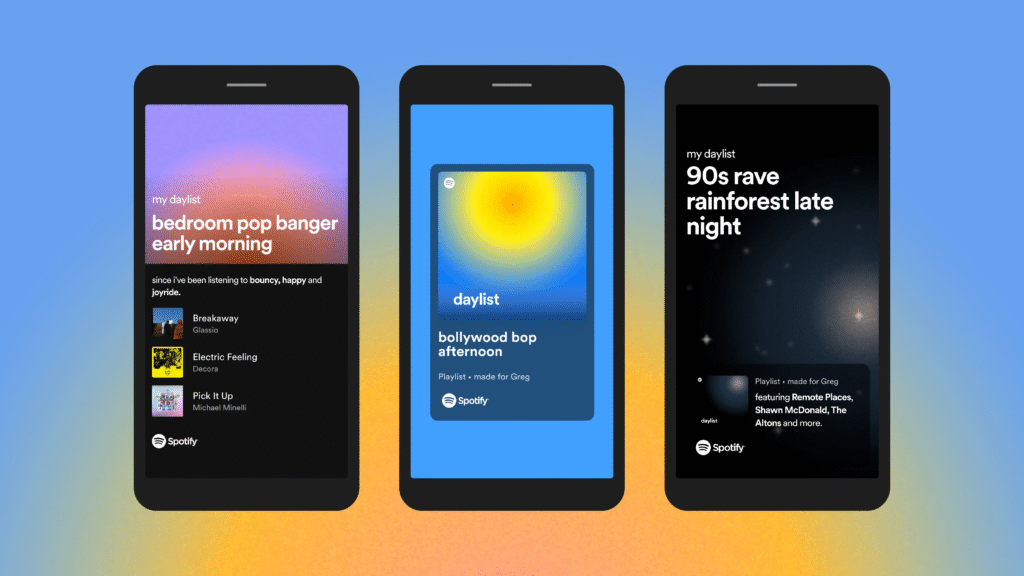
Spotify, the Swedish audio streaming powerhouse, has also adopted AI to make smarter decisions about music discovery and artist engagement. By analyzing millions of unique listening signals, social trends, and real-time mood shifts, the AI can predict which tracks will resonate most in a specific user’s day. This enables Spotify to optimize “Daylist” updates and ensure new releases are visible to the right listeners immediately. The digital experience has reached a new peak this year with the global expansion of the AI DJ. This personal virtual host now uses advanced natural language processing to provide real-time cultural commentary and artist trivia between songs. Consequently, the 2026 update allows the DJ to assist with “Prompted Playlists” based on complex text descriptions like “music for a rainy drive through the mountains”.
3/ Hola Tech’s pov:
AI is no longer a distant trend for media and entertainment because it is already rewriting the rules of the game. To win today, production houses and broadcasters must move as fast as modern technology and audience expectations. We suggest becoming “AI-first” by making intelligent agents central to every creative and operational decision. This transition begins by rewiring your operating model to empower creators with tools that automate rote tasks like rotoscoping and metadata tagging. Consequently, companies can move away from slow production hierarchies toward flatter, real-time creative structures. Success also requires leadership to act as active AI users rather than mere cheerleaders. They must focus on high-value bets, such as AI-driven personalization, while prioritizing the human side of storytelling. Finally, media organizations should redirect spending by automating manual post-production and upgrading legacy distribution systems. Furthermore, reinvesting these savings into high-quality first-party data ensures a scalable infrastructure for a future of hyper-personalized content.
Want to stay ahead of the curve in the world of decentralized technology and AI? Check out Hola Tech blog for more exciting technology news and useful information!

author
I leverage my skills in strategic planning, team coordination, and technology solutions as the Co-founder and COO of Hola Tech. Passionate about innovation and efficient problem-solving, I am dedicated to pushing the boundaries of what is possible in the tech industry with Hola Tech