- Tom
- ai, News, Technology
- 0 Comments
- 18576 Views
Asana acquires no-code agent-builder StackAI
1/ Key takeaways
Asana’s $75 million acquisition of no-code agent-builder StackAI signals a major shift toward deeply integrated, multi-agent enterprise workflows. Therefore, tech builders must prioritize cross-system execution layers over standalone wrappers to stay competitive in the market.
2/ Asana acquires no-code agent-builder StackAI
2.1. Asana’s $75M acquisition of StackAI
Asana has acquired the workflow automation company StackAI for $75 million. This move is part of a larger effort to position itself as an AI-native workplace platform. StackAI’s founders, Tony Rosinol and Bernard Aceituno, will join Asana. Consequently, Asana framed the acquisition as part of its broader AI pivot. It seeks to build its platform into “the operating system for human-agent teams.”
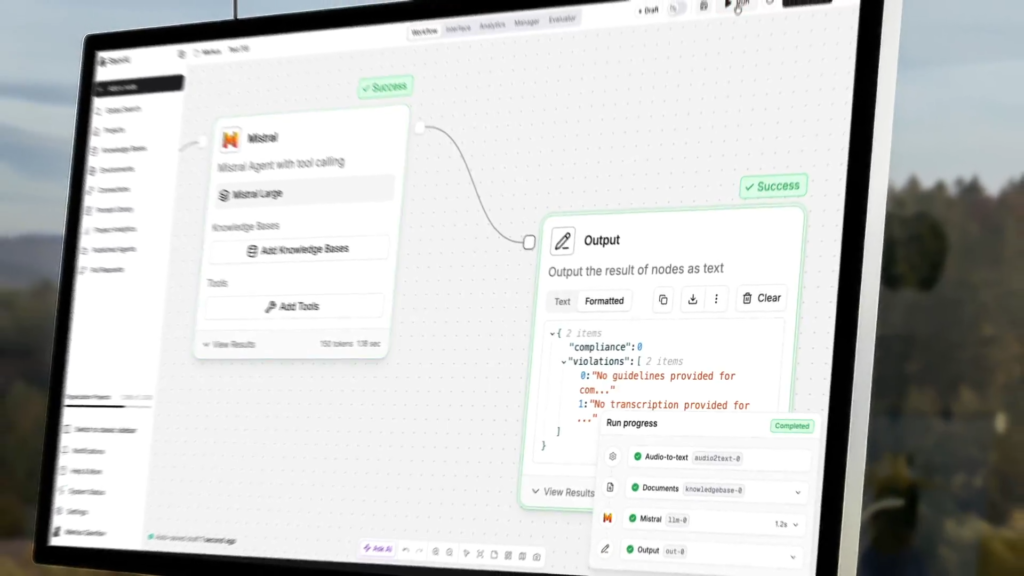
Built as an AI workflow-automation system, StackAI designs agents to operate within existing business systems. It pulls in data from platforms like Salesforce, Slack, and Gsuite. As a part of Y Combinator’s Winter ’23 cohort, the company faced fierce competition. Rivals included automation tools like Zapier as well as AI labs like OpenAI and Anthropic. StackAI had raised just under $20 million, according to PitchBook data. Most of it came in a recent $16 million Series A round. That round included funding from Gradient, Epakon Capital, Lobby VC, LifeX Ventures, and Vercel CEO Guillermo Rauch.
2.2. Asana’s AI pivot and market strategy
Users are likely most familiar with Asana’s traditional work management system. However, the company has released a number of AI-oriented products in recent years. Most notable are the AI Studio agent builder and AI Teammates series of pre-built automations. Equivalent tools are available from major labs. Yet, Asana sees its deep integration into existing corporate workflows as a key advantage. This allows it to distill context and training data that would otherwise be unavailable to outside models.
Asana has struggled on public markets during the AI era. It lost more than half its market cap value since the introduction of ChatGPT. This spiral grew worse with the departure of founder Dustin Moskovitz as CEO last March. Nevertheless, revenue has continued to grow steadily. The new leadership is confident that its human-agent products will enable it to rebound.
“This acquisition accelerates our roadmap and takes us into the next phase of human-agent work,” said CEO Dan Rogers. “We’re already seeing real momentum with AI Teammates and AI Studio. Therefore, StackAI now lets them go further, agentifying the most complex business processes end-to-end.”
3/ Hola Tech’s pov:
Asana’s recent acquisition of StackAI for $75 million signals a massive shift in how enterprise tech builders must approach product development. For too long, software teams have built isolated AI features that feel like glorified wrappers. However, this high-profile deal proves that true enterprise value lies in deep, multi-agent workflow integration. Modern builders should stop focusing on simple chat interfaces and instead design native agents that can pull and write data across fragmented systems like Salesforce or Slack. By embedding these capabilities directly into core work environments, you unlock a highly sustainable competitive advantage because you tap into unique, contextual training data that general-purpose models simply cannot access.
To win in this changing market, software engineers and product managers must prioritize building cross-system execution layers over standalone tools. Your AI agents must act rather than just talk. Therefore, you should focus on creating multiplayer systems where humans can seamlessly hand off complex tasks to automated teammates. It is vital to design your systems to respect strict enterprise data governance while maintaining smooth, bi-directional sync across all legacy tools. Ultimately, the future belongs to platforms that serve as a unified operating system for human-agent collaboration. Focusing on these integration capabilities will ensure your tech product remains essential to modern business workflows.
Want to stay ahead of the curve in the world of decentralized technology and AI? Check out Hola Tech blog for more exciting technology news and useful information!

author
I leverage my skills in strategic planning, team coordination, and technology solutions as the Co-founder and COO of Hola Tech. Passionate about innovation and efficient problem-solving, I am dedicated to pushing the boundaries of what is possible in the tech industry with Hola Tech